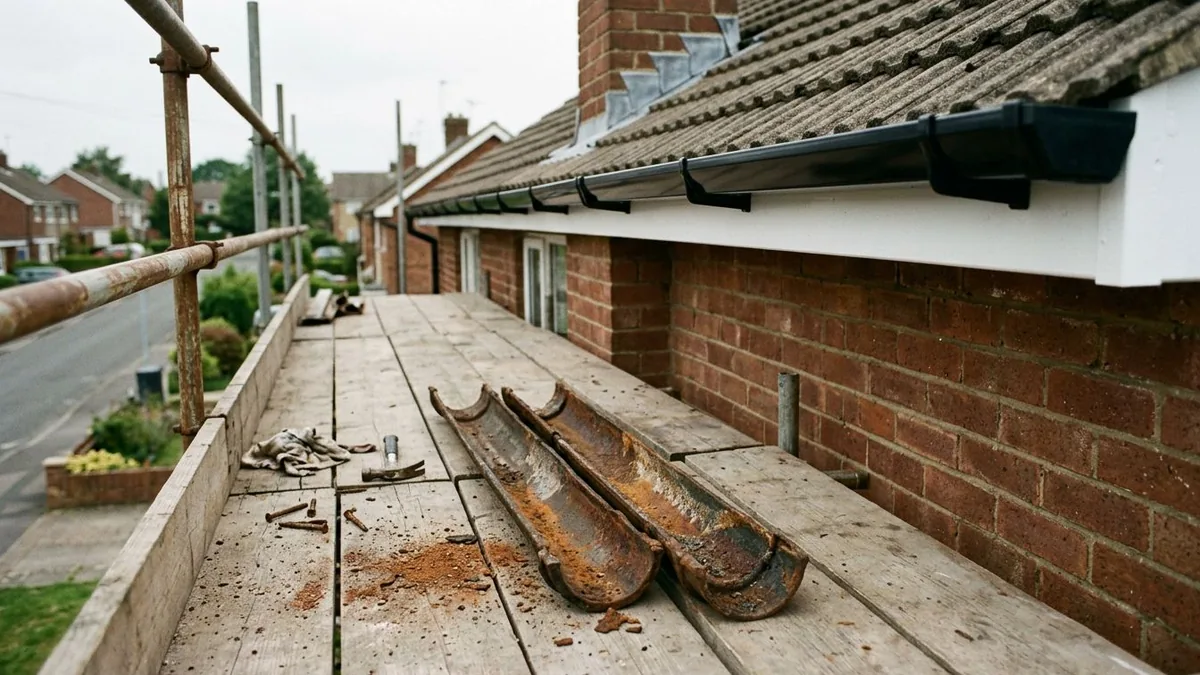
Replacing the guttering on a typical semi in uPVC runs to a few hundred pounds. Cast-iron-style and metal options cost more. Material is only one part of the price, though. Length, the number of floors, and how easily a roofer can reach the roofline all move the final figure just as much.
What drives the price of a gutter replacement
The biggest single factor is usually access. A tall house needs scaffolding or a tower hoist. That costs more than a ladder on a single-storey extension. Total length also scales the price, along with the number of downpipes and corners. A run with awkward angles takes longer to fit than a straight one.
Material choice sits on top of all that. A full uPVC gutter replacement on a typical semi runs roughly £600–£1,600, according to current UK trade price guides, with the length of run and number of storeys explaining most of that spread. Cast-iron-style profiles cost more for the same length. Treat any number as a starting point, since the real figure depends on the details above.
Timing matters too, though it’s less often mentioned. A straightforward run on a standard semi usually takes a day or two, similar to a typical fascia and soffit job. A larger house, or one where the fascia boards also need replacing, can take longer. Ask for a rough timeline alongside the price, since a quote that skips this detail often skips other details too.
uPVC guttering: cost and lifespan
uPVC is the most common material on modern UK homes. It’s the cheapest of the three main options. That’s largely because it’s light to fit and needs almost no upkeep. It doesn’t rust or rot, though it can turn brittle with age and sun. Our guide on gutter repair vs replacement covers this exact fault, which tends to show up after a couple of decades.
It’s the standard choice on most post-war homes, so it’s also the easiest to source and fit fast. That keeps both material and labour costs down.
Cast iron guttering: cost and lifespan
Real cast iron, or a metal profile made to match it, costs more than uPVC for the same length. It’s heavier and slower to fit. Real cast iron also needs regular painting to stop rust, an ongoing cost uPVC doesn’t carry.
The trade-off is life span and looks. Cast iron can last many decades when well kept. It’s often the only choice that looks right on an old or listed home. A modern plastic profile would look out of place against old brick.
Aluminium guttering: cost and lifespan
Aluminium sits between the two on price. It lasts a long time and weighs less than cast iron, so it’s cheaper to fit even though the metal itself costs more. It doesn’t rust the way plain cast iron can. It also comes in profiles made to look traditional. That makes it a common middle path on older homes. Because it’s lighter, it also needs a less heavy-duty bracket system than genuine cast iron, which can trim the labour side of a quote slightly.
Whichever material you choose, the fixing detail matters as much as the gutter itself. See our guide on blocked gutters and roof damage for what happens when falls and brackets aren’t set up properly. It’s also worth asking whether gutter guards make sense while the new run is being fitted. Adding them later means paying for access to the roofline a second time.
Why period properties often cost more
On a listed building or in a conservation area, material choice may not be entirely down to preference. The Planning Portal’s guidance on listed building consent sets out when consent is needed for external changes. Like-for-like replacement in the original material is often expected. This isn’t relevant to every job, but check it before assuming a cheaper material is an option.
Access is also frequently harder on period housing. Taller storeys and decorative eaves details both add time, regardless of material. If storm damage forced the issue rather than planned replacement, check whether insurance covers any of the cost first.
Getting a fair, itemised quote
A proper quote breaks down the material, length, downpipes, brackets and fascia work on their own, along with the access method. It shouldn’t arrive as one lump sum. That breakdown is what lets you compare quotes fairly, since one roofer’s price might include scaffolding that another has left out. Ask specifically whether access is priced as a ladder, a tower, or full scaffolding, since that single line item can swing the total more than the choice of material does.
Before agreeing to anything, check the roofer’s public liability insurance. Replacement work usually involves scaffolding over a path or driveway. Our guide on how to vet a roofer covers the rest of what’s worth checking. Our wider guide to hiring roofing contractors near you covers the other questions worth asking. If the job turns out to be bigger, our roof repair cost guide covers how prices scale up.
Find Trusted Roofers connects homeowners with roofers in Nottingham and roofers in Derby who provide itemised, comparable quotes. Our Nottingham guttering page has more on what roofers there typically quote for on the city’s mix of older and newer housing. If you’re in Swindon, see our Swindon guttering page. Tell us about your gutters and we’ll match you with a roofer covering your postcode.
Sources
- Planning Portal: listed building consent — when consent is relevant to like-for-like guttering on a listed building or in a conservation area.
- FixMyRoof — fascia, soffit and guttering cost guide and MyJobQuote — gutter replacement cost guide — two independent current UK trade price guides for the uPVC gutter replacement figure above.