Roofing problems rarely happen at a convenient time. When a storm strips tiles at midnight or water starts coming through a bedroom ceiling, knowing what actually helps, versus what just feels like doing something, makes a real difference.
What is a roofing emergency
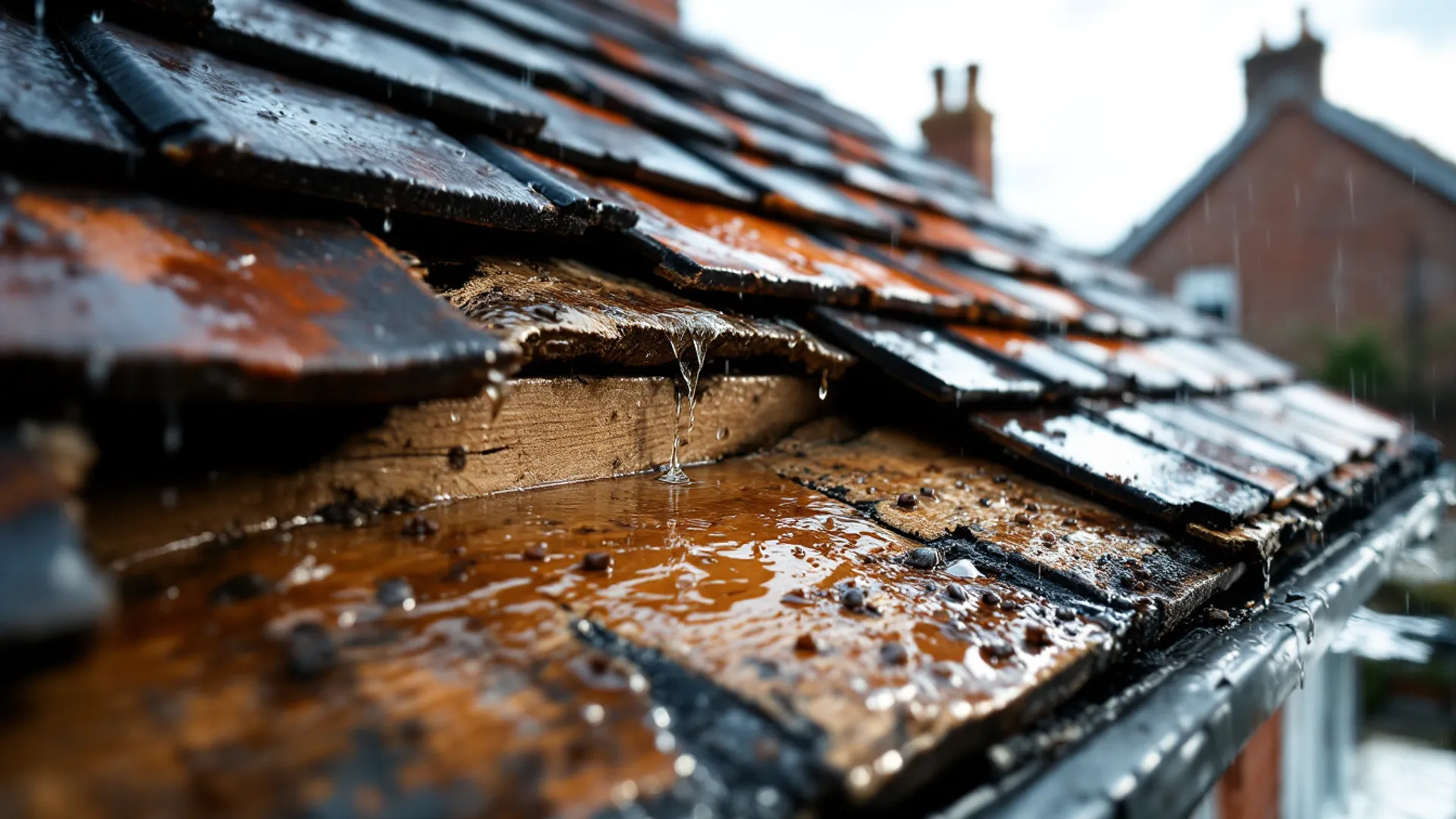
A genuine roofing emergency is active water coming into the property, tiles or slates hanging loose above a doorway, path or driveway where they could fall on someone, a storm-stripped section of roof exposing the property to further weather, or visible structural movement following impact damage. If any of these apply, treat it as urgent rather than waiting for a routine appointment slot.
What to do right now (make safe)
Start by keeping people clear of any area where debris or tiles could fall, both inside the house and outside if there’s anything hanging above a path or entrance. Inside, contain any active water with buckets under drips, and move valuables and furniture clear. If a ceiling is visibly bulging with trapped water, it’s usually better to pierce it deliberately from below with a screwdriver over a bucket. A controlled release causes far less mess and damage than the ceiling giving way on its own later. Photograph everything from a safe position, since this becomes your evidence if the cause turns out to be storm damage and you need to make an insurance claim — see our storm damage guide for that process.
What you should not do, under any circumstances, is go onto the roof yourself. A wet, storm-affected or simply aged roof is far more dangerous underfoot than it looks from the ground. A fall is a categorically worse outcome than a few hours’ delay.
Temporary vs permanent repair
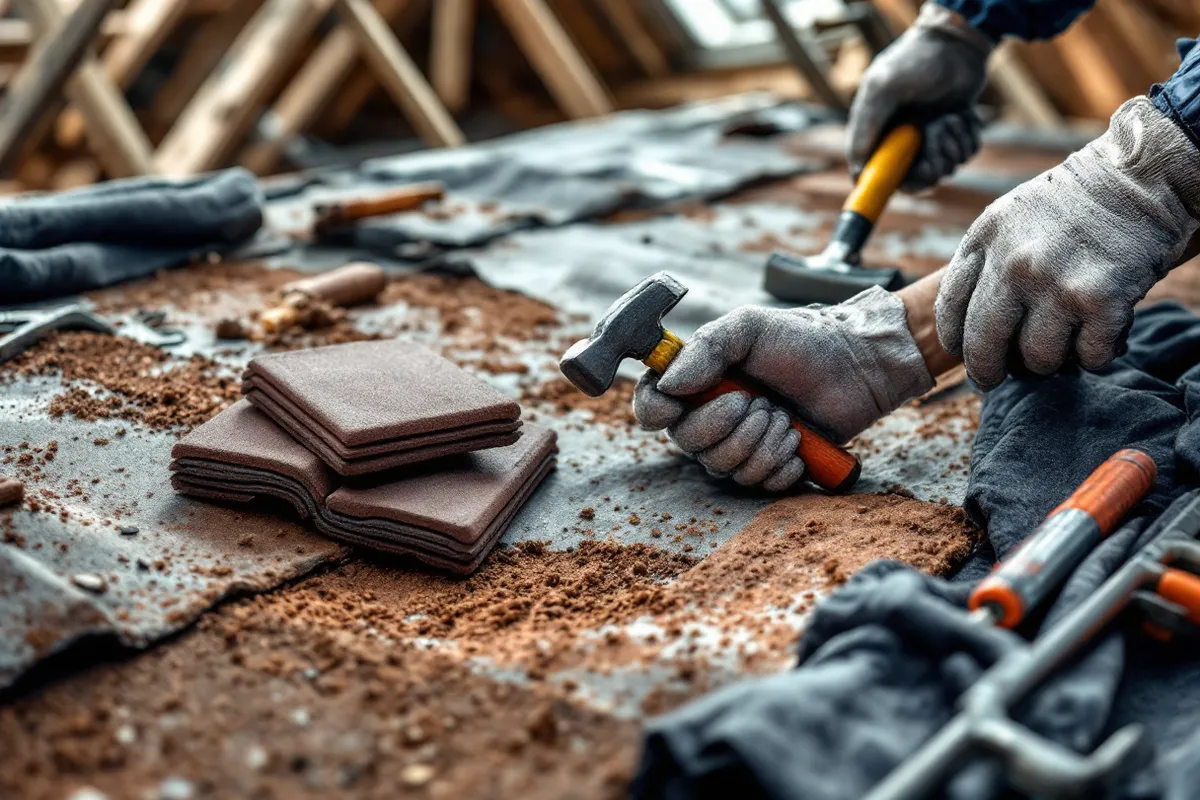
An emergency call-out is about making the property safe and weathertight, not delivering the final fix. A roofer’s first visit typically involves securing loose material, sheeting or tarping the exposed section, and documenting the damage. The permanent repair, whether that’s replacing tiles properly or renewing failed flashing, is usually quoted and scheduled separately once the roof can be inspected in daylight. Treat the emergency visit and the lasting repair as two distinct jobs, and be wary of anyone who tries to sell you a full re-roof in the middle of an emergency call-out before a proper survey.
What an emergency call-out costs
Costs depend on how much sheeting or securing work is needed and the time of the call-out. A make-safe visit commonly runs from around £150 to £350, with the permanent repair quoted separately. See our roofing costs guide for wider UK price context, and our leaking roof guide if the emergency has already resolved into an ongoing leak you’re trying to diagnose.
Find Trusted Roofers connects UK homeowners with local roofers who respond quickly to genuine roofing emergencies, and are upfront about make-safe versus permanent repair costs from the first call. Tell us what’s happened and we’ll match you with a roofer covering your postcode.
Emergency Roof Repair: What To Do Now — FAQs
What counts as a roofing emergency?
Active water coming into the property, tiles or slates hanging loose above a path or doorway, storm-stripped sections of roof, and any damage where debris could fall on someone. If in doubt, treat it as urgent, since an unnecessary call-out costs far less than escalating damage.
Should I go on my roof to fix a problem myself?
No. Wet, storm-affected or aged roofs are more dangerous underfoot than they look, and a fall causes a far worse outcome than waiting a few hours for a professional. Everything you can safely do to help is from the ground or inside the loft.
How fast can an emergency roofer usually attend?
Many emergency roofers can attend the same day for a make-safe visit, although demand spikes sharply after named storms when every roofer in a region is dealing with call-outs. Providing clear details and photos when you request help lets a roofer prioritise genuinely urgent jobs.
What does an emergency call-out cost?
A make-safe visit secures the area and makes it weathertight. It typically costs from around £150-£350 depending on time, access and how much sheeting is needed. The permanent repair is quoted separately once the roof can be inspected properly in daylight.
Is emergency roof repair covered by insurance?
If the damage is storm-related, the emergency make-safe visit and the permanent repair are usually both covered. Keep every receipt and get a written report from the roofer. See our storm damage guide for the claims process.