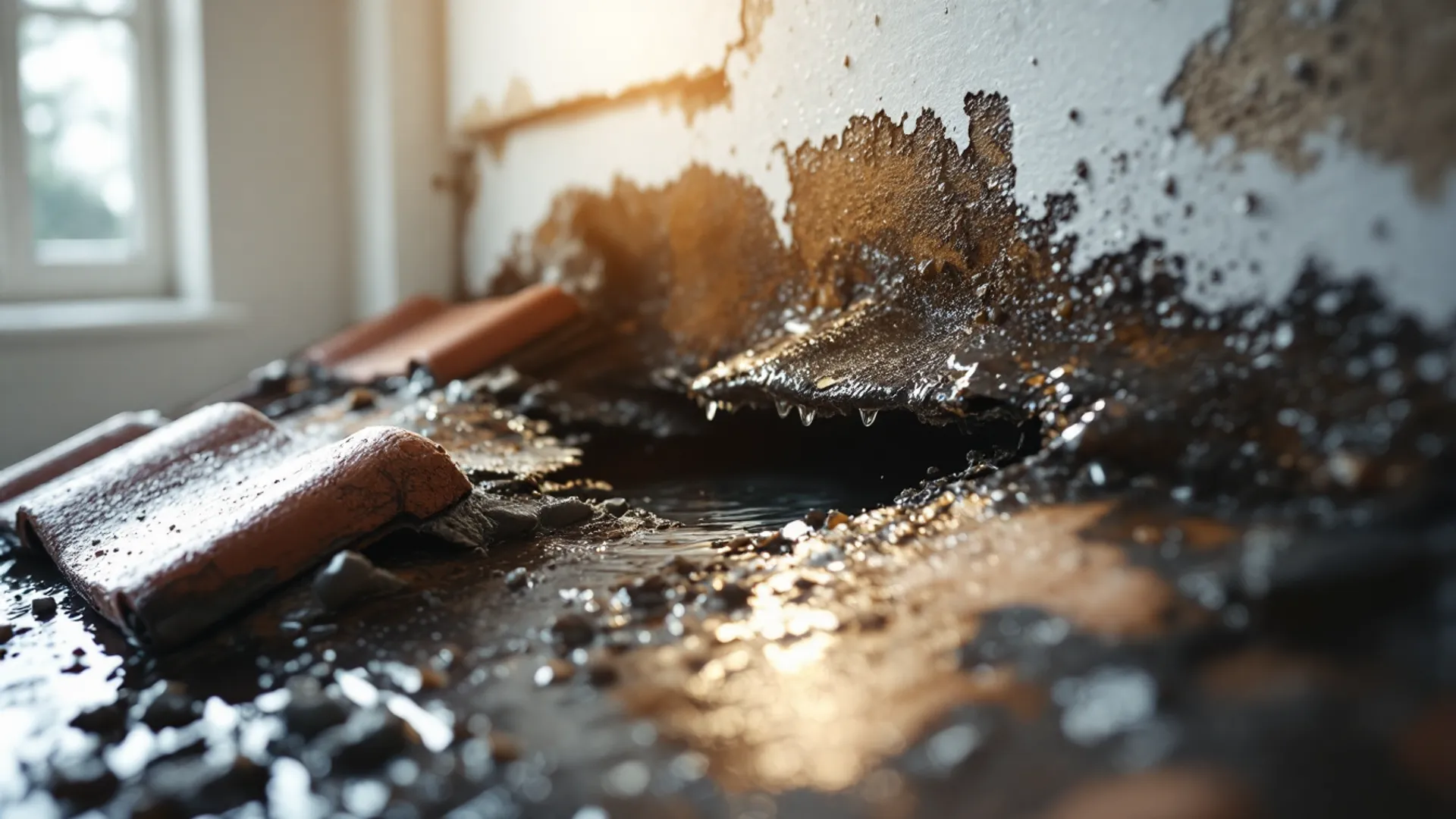
Water rarely enters a roof exactly where it shows up inside. It runs down the underside of the felt or membrane, follows a rafter, and drips somewhere else entirely. That’s why so many leaks get “fixed” twice before anyone finds the real cause. Here’s how to think about a leaking roof properly.
First steps when your roof is leaking
Before anything else, limit the damage. Move anything valuable out from underneath the wet patch, and put a bucket down. If a ceiling is bulging with trapped water, pierce it carefully from below with a screwdriver over a bucket. A controlled release is far better than a ceiling collapsing on its own. Photograph everything: the ceiling stain, any visible damage outside, the date. If a storm caused it, this is exactly what an insurer will ask for later.
What you shouldn’t do is go up on the roof yourself. Wet tiles and slates are dangerously slippery, and a fall is a far worse outcome than a delayed repair.
How to find where a roof is leaking
The entry point is almost always higher up the slope, and often some distance from where water appears inside, since water tracks along the underside of the roofing felt or a rafter before dripping off at a low point, a nail, or a join. A roofer tracing a leak will check, in rough order of likelihood: the flashing around any chimney or wall junction, valleys where two roof slopes meet, ridge and hip tiles for cracked mortar, individual slipped or cracked tiles, and, on flat roof sections, splits, blistering or ponding water.
If you can safely see into the loft, a torch check after rain can show a damp trail leading back toward the entry point. This is useful information to pass on when you request a repair.
Common causes of a leaking roof
Leaks around the chimney
A large share of “roof leaks” are actually chimney lead-work failures rather than problems with the roof covering itself. Lead flashing that has lifted, cracked, or been badly repaired with a smear of cement, a common bodge that fails within a season or two, lets water track down behind the stack. It then shows up as a damp patch nowhere near the chimney itself.
Valley and junction leaks
Valleys, where two roof slopes meet, carry more water than any other part of a roof. A cracked valley tile, perished lining or debris blockage there causes some of the worst leaks, because water backs up rather than just dripping through one gap.
Flat roof leaks
Flat roofs fail differently: ponding water that eventually finds a pinhole, blistered or split felt, or a failed upstand where the flat section meets a wall. A flat roof that’s held for years can start leaking quickly once the covering passes the end of its life.
Slipped or cracked tiles and slates
The most straightforward cause is a tile or slate that has slipped out of position or cracked after a storm. It’s also the easiest to fix, provided it’s caught before the exposed felt underneath perishes too.
Temporary fixes vs a proper repair
A tarpaulin or a smear of roofing sealant can buy time, but it isn’t a repair. It’s a stopgap that needs following up. The right fix depends entirely on the cause: a slipped tile gets refitted, failed lead gets re-dressed or renewed, a cracked valley gets replaced, not sealed. Beware of anyone offering a quick “seal it and it’ll be fine” fix without explaining what actually failed. That’s how the same leak reappears eighteen months later, usually worse.
What roof leak repairs cost
Costs vary hugely with the cause, since a handful of slipped tiles is a different job to a lead valley that needs stripping and relaying. For realistic UK price ranges across repair types, see our roofing costs guide. Access and materials matter more than the size of the leak itself.
When to call an emergency roofer
If water is actively coming into the property, tiles are hanging loose above a path or entrance, or a storm has stripped a section of roof, treat it as an emergency rather than waiting for a routine slot. See our emergency roof repair guide for exactly what to do while you wait, and if the damage followed a named storm, our storm damage guide covers the insurance side.
Find Trusted Roofers connects UK homeowners with local roofers who can trace a leak properly rather than just patching the symptom. Tell us about the problem and we’ll match you with a roofer covering your postcode.
Leaking Roof? Causes, Fixes & What To Do — FAQs
Why has my roof started leaking suddenly?
Sudden leaks usually follow a specific event, such as a storm loosening tiles or flashing, a blocked gutter overflowing into the eaves, or ice and snow forcing water under tiles. If nothing obvious changed, a slow leak that finally soaked through is more likely, since the damage may have started weeks earlier.
Can I fix a roof leak myself?
You can limit the damage inside with buckets, moving belongings, or piercing a bulging ceiling bubble over a bucket. Going onto the roof yourself is not worth the risk, though, and a temporary patch from the ground rarely fixes the actual cause. Get it inspected properly.
How much does it cost to fix a leaking roof?
A straightforward repair, such as a slipped tile or a small flashing fix, is often £150–£400. Valley leaks, chimney lead failures or damage that's spread into the timbers cost more, since the roofer has to open the roof up to fix them. See our roofing costs guide for fuller ranges.
Will a leaking roof be covered by insurance?
Storm damage is usually covered, while a leak from wear and tear or poor maintenance generally isn't. Photograph the damage and get a written report from the roofer stating the likely cause, since that's what insurers ask for.
How urgent is a roof leak?
Active water ingress is always urgent, since even a slow drip left for weeks can rot timbers and ruin ceilings. Treat any leak as something to get looked at within a few days, and anything with water actively coming through as same-week or emergency.