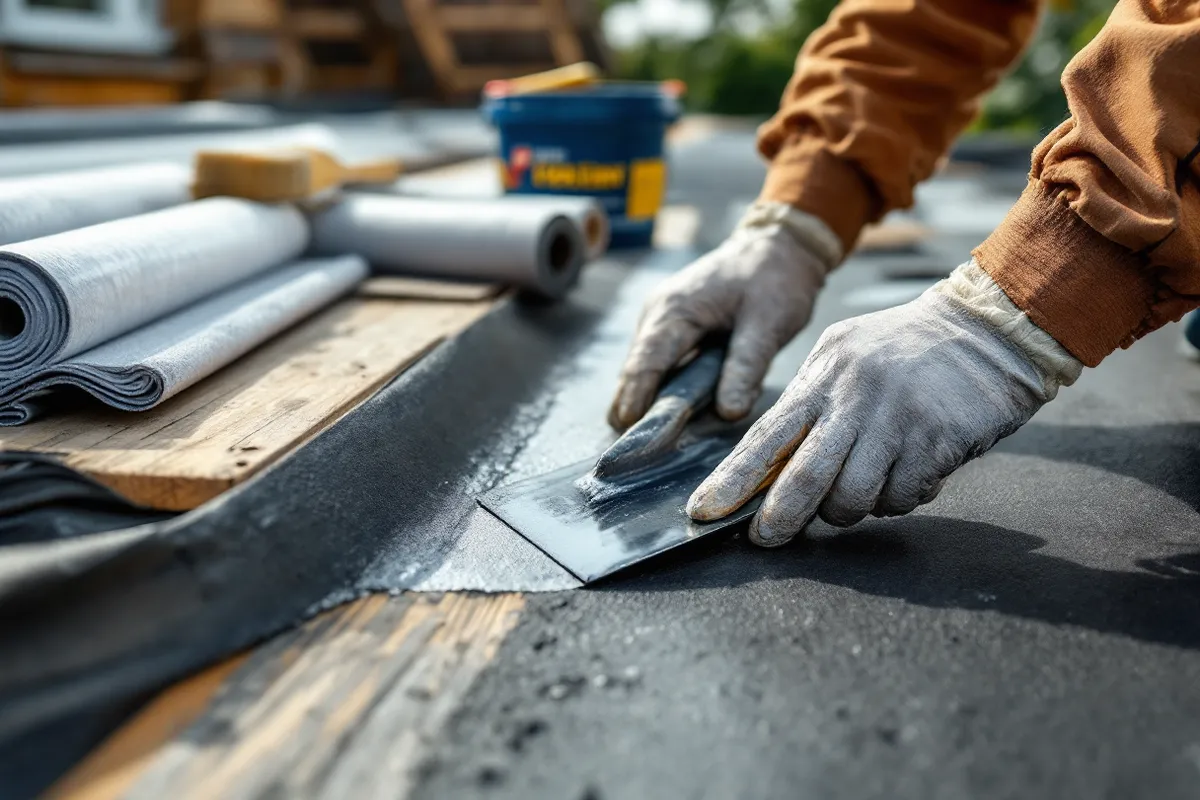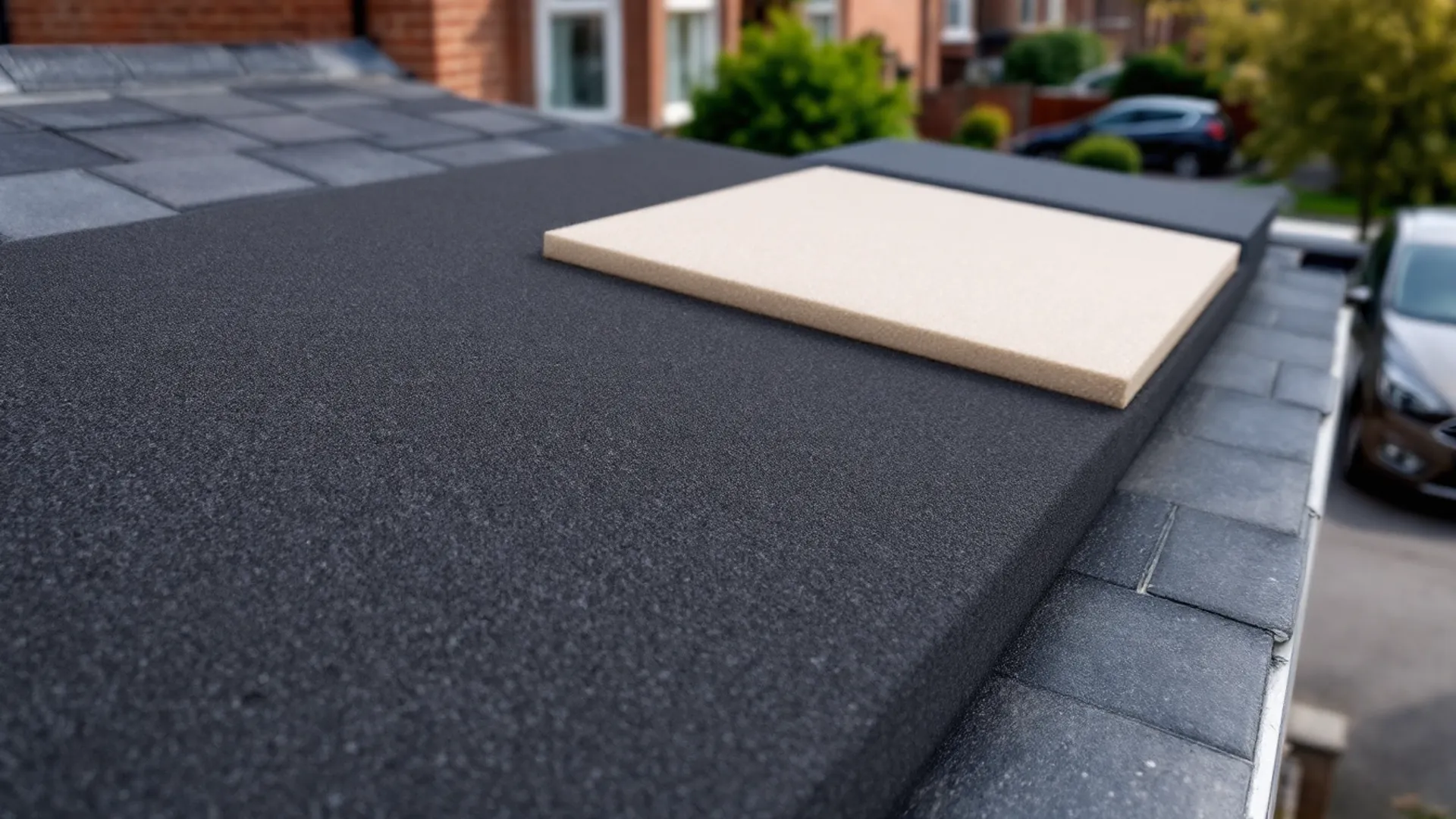
Flat roof materials have improved dramatically since the felt-only days. The choice between them is now genuinely worth thinking through, rather than defaulting to whatever’s cheapest.
The main flat roof materials
Four materials cover the vast majority of UK flat roofs. EPDM rubber is a single flexible synthetic rubber sheet. GRP fibreglass is a rigid, seamless laminate. Single-ply membrane uses larger welded synthetic sheets, common on bigger roofs. Felt is layered bituminous sheets, covered in detail in our roofing felt guide.
EPDM rubber — pros & cons
EPDM is fitted as one continuous rubber sheet with minimal seams. This makes it fast to install and highly resistant to UK weather cycling, since the material expands and contracts through temperature swings without splitting. It’s excellent on garages, extensions and dormers. Its main weak point isn’t the material itself — properly cured EPDM is very durable. The real risk is installation quality: a poorly bonded seam or adhesive edge detail is where most EPDM failures start. Sharp objects or repeated foot traffic in one spot can also puncture it.
GRP fibreglass — pros & cons
GRP is laid wet and cures into a rigid, fully bonded, seamless surface. This makes it a strong choice for balconies and walk-on roofs, where EPDM’s flexibility is less of an advantage. Because it’s rigid rather than flexible, GRP can crack if the timber deck beneath it moves. Deck stability matters more here than with EPDM. It also costs a little more, and application quality — correct resin mix, suitable weather during installation — has a big effect on how long it lasts.
Single-ply — pros & cons
Single-ply membrane sits between EPDM and traditional felt in typical use. The sheets are larger than EPDM and welded, rather than glued, at the joints. It suits bigger flat roof areas well, including some commercial and larger domestic applications. Single-ply offers strong durability and a good cost-to-lifespan ratio, although it’s specified less often than EPDM on small domestic jobs like a single garage.
Felt — pros & cons
Modern high-performance torch-on felt is a legitimate, budget-friendly option for small, low-traffic roofs like sheds. See our roofing felt guide for how it’s laid and what to expect. It’s the cheapest option and the shortest-lived. The old three-layer nailed felt that gave flat roofs their poor reputation is largely obsolete now, since modern torch-on and self-adhesive felts perform considerably better.
Which lasts longest / costs least
As a rough ranking, felt is cheapest and shortest-lived at 10–20 years depending on grade. Single-ply sits in the middle on both cost and lifespan, at 20–25+ years. EPDM and GRP cost more upfront but last longest, at 25–30+ years, when properly installed. See our roofing costs guide for actual UK price ranges by roof size. The honest advice from most roofers: for anything bigger than a shed, EPDM or GRP pays for itself over the roof’s lifetime versus repeated felt replacements.
Find Trusted Roofers connects UK homeowners with flat-roofing specialists who install EPDM, GRP and single-ply properly, since not every installer treats every material the same way. Tell us about your roof and we’ll match you with a roofer covering your postcode.
EPDM vs GRP vs Felt: Best Flat Roof? — FAQs
What is the best material for a flat roof?
There's no single best material for every roof. EPDM suits most garage and extension roofs well, GRP suits walk-on areas like balconies, and felt remains a reasonable budget choice for small, low-stakes structures. The right choice depends on the roof's size, use and detailing, not a universal ranking.
What are the disadvantages of EPDM roofing?
EPDM can be punctured by sharp objects or sustained foot traffic in one spot. Poor-quality adhesive or seam work causes most of its failures, although the material itself is very durable. Installation quality matters enormously.
What are the disadvantages of GRP fibreglass roofing?
GRP is rigid rather than flexible, so it can crack if the deck beneath moves or flexes. A poor-quality resin mix or application in unsuitable weather can lead to premature cracking. It also costs more than EPDM for a comparable roof.
Is single-ply roofing good?
Single-ply membrane uses welded sheets in a larger format than EPDM. It performs well and is common on bigger flat roofs, extensions and commercial-style buildings, offering a strong balance of durability and cost. Since it's less commonly specified on small domestic jobs than EPDM, ask your roofer whether it suits your project.
How long does each flat roof material last?
As a rough guide, old-style felt lasts 10-15 years and modern high-performance felt lasts up to 20. Single-ply typically runs 20-25+ years. EPDM or GRP can reach 25-30+ years when properly installed on a sound deck with correct falls.