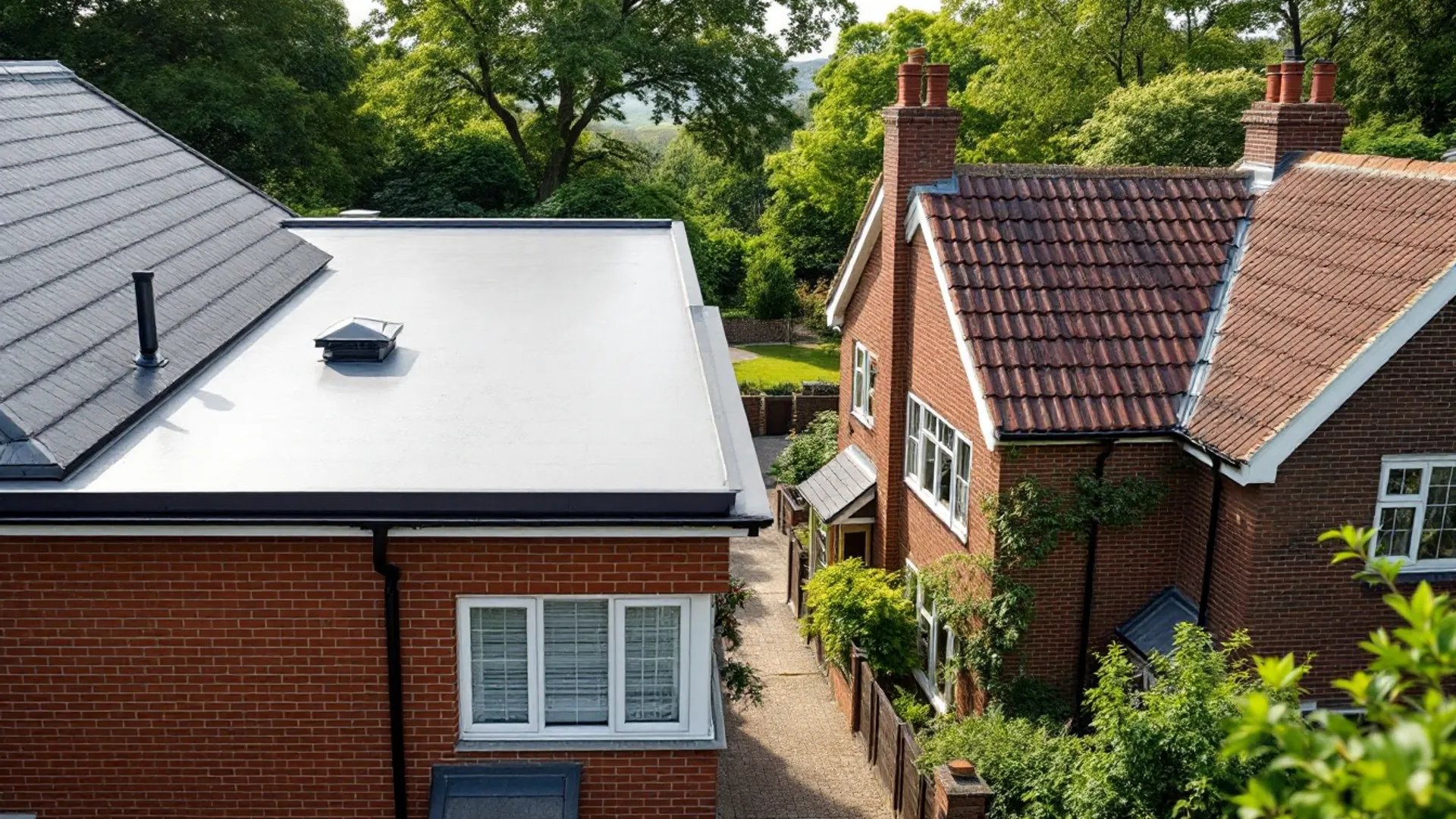
Choosing between a flat and a pitched roof — usually for an extension, but sometimes for a full re-roof — comes down to more than looks. Here’s what actually differs.
What is a flat/pitched roof
A pitched roof slopes steeply enough (typically 15 degrees or more) that gravity alone clears rainwater, covered in tile or slate. A flat roof has a much shallower slope — often just 1 to 15 degrees, sometimes looking perfectly flat to the eye — and relies on a continuous waterproof membrane (EPDM, GRP, or felt) plus correctly engineered falls to drain water to an outlet, rather than gravity doing most of the work.
Cost compared
For the same floor area, a flat roof is usually cheaper to build than a pitched roof, because it needs less structural timber and covers a smaller surface area for the same footprint. See our roofing costs guide for typical UK price ranges on both. Where the maths shifts is over the long term: a well-installed pitched roof in tile or slate can outlast two or three flat roof replacements, so upfront savings on a flat roof aren’t necessarily lifetime savings.
Lifespan & maintenance
Pitched roofs in tile or slate need little active maintenance beyond occasional repairs to individual tiles, flashing or ridges — see our types of roof guide for how long different pitched coverings typically last. Flat roofs need more attention: keeping outlets and gutters clear of leaves and debris, and a periodic check for blistering, splits or ponding water, particularly after the covering passes 15–20 years old. Our flat roof materials guide compares how long EPDM, GRP and felt actually last.
Drainage & leaks
This is the core practical difference. A pitched roof sheds water by shape; a flat roof has to be engineered to drain, which means falls, correctly positioned outlets, and membrane detailing at every upstand and penetration (rooflights, pipes, wall junctions) matter far more. Ponding water — rainwater sitting on the roof more than about 48 hours after rain stops — is the clearest sign a flat roof’s falls aren’t working as designed, and it’s worth raising with a roofer even before it causes a visible leak.
When each makes sense
Flat roofs suit single-storey extensions, garages, dormers and bay windows, where the available height doesn’t allow a full pitched structure, or where the design calls for it. Pitched roofs suit the main body of a house, both for tradition and because they need less ongoing attention over decades. If you’re extending and have genuine choice between the two — enough headroom for either — weigh the upfront cost saving of flat against the lower maintenance and longer lifespan of pitched, and get a roofer or architect to confirm what the structure can actually support before deciding.
Find Trusted Roofers connects UK homeowners with local roofers experienced in both flat and pitched roofing, who’ll recommend honestly based on your building rather than what’s easiest to install.
Flat Roof vs Pitched Roof: Pros & Cons — FAQs
Is a flat roof cheaper than a pitched roof?
Generally yes, for the same footprint — a flat roof uses less material and structure than a full pitched roof. But over the roof's lifetime, a pitched roof in tile or slate often works out more cost-effective because it typically lasts longer before needing full replacement.
Do flat roofs leak more than pitched roofs?
Older flat roofs (traditional felt) had a poor reputation for leaks because they rely on falls and membrane integrity rather than gravity alone. Modern EPDM and GRP flat roofs, properly installed with correct drainage, are reliable — but any flat roof depends more on installation quality than a pitched roof does.
Can you build an extension with a pitched roof instead of flat?
Often yes, and some homeowners prefer it for looks or loft-space reasons — but a pitched roof needs more height and structural support than a flat roof of the same span, which isn't always available over a single-storey extension. A roofer or architect can advise what your extension can actually take.
How do you stop a flat roof from leaking?
Correct falls (a slight slope, usually 1:40 to 1:80, so water actually drains rather than pooling), a quality membrane properly detailed at every upstand and edge, and regular clearing of debris from outlets. Ponding water sitting for more than 48 hours after rain is the clearest warning sign something's wrong.