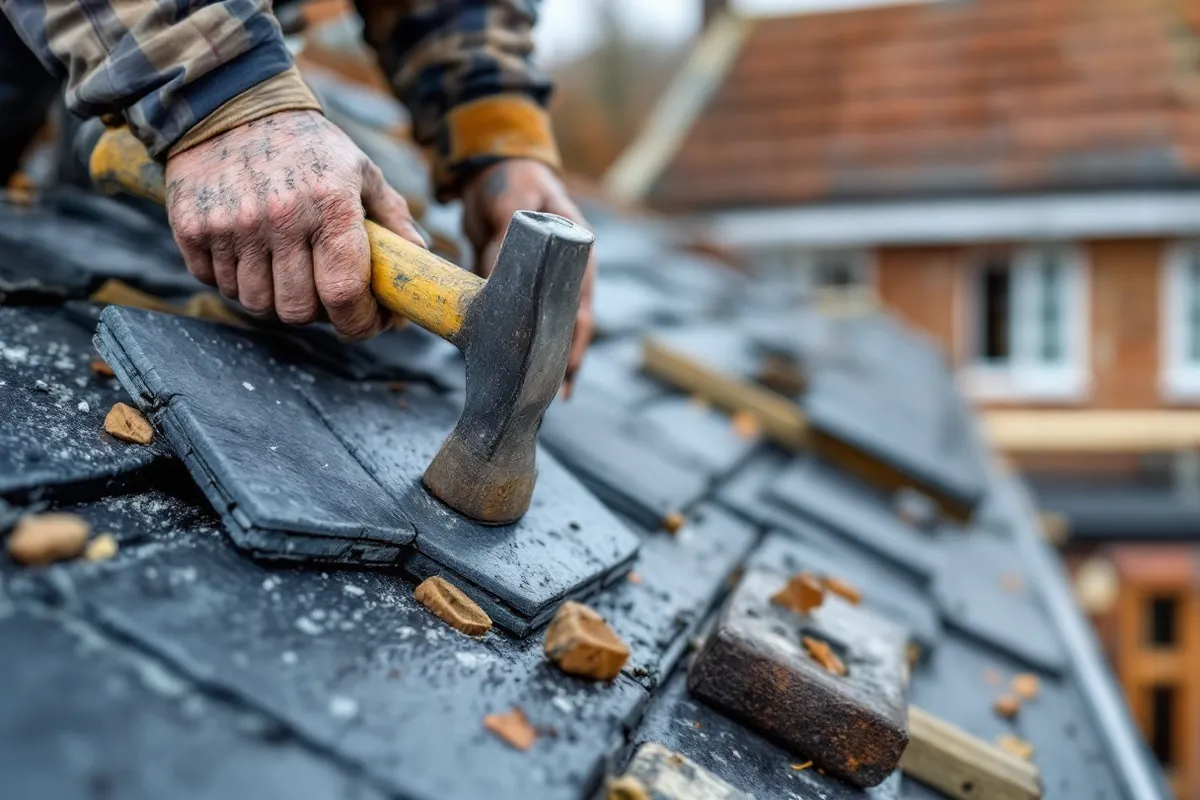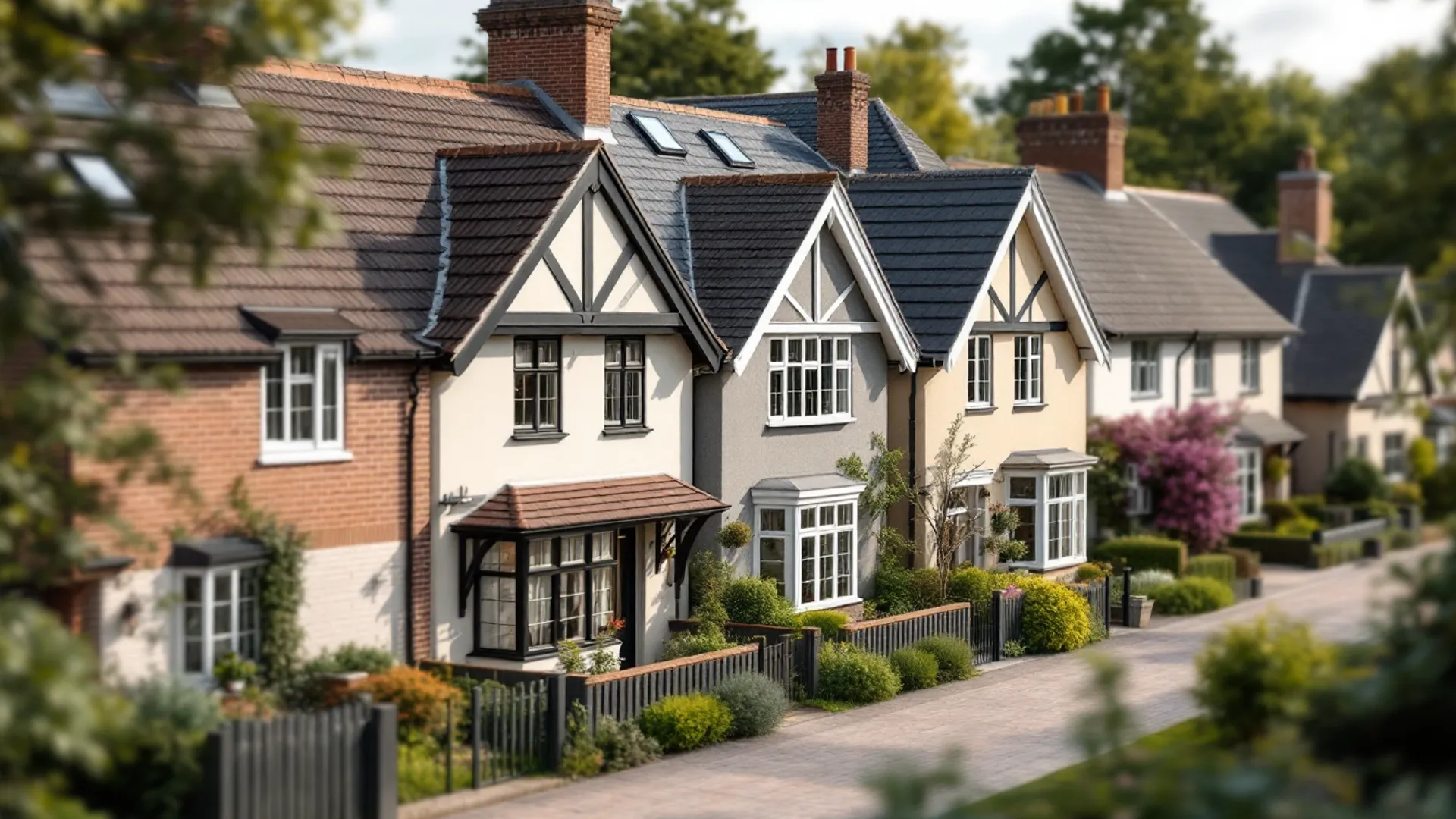
Most homeowners never think about their roof’s shape until they need to replace or repair it. At that point, the terminology (hip, gable, mansard) suddenly matters. Here’s what the common UK roof types actually are, and what changes between them.
Pitched vs flat roofs
The basic split is pitched, sloped to shed water quickly, versus flat, a shallow slope of usually 1–15 degrees that relies on falls and a waterproof membrane rather than gravity alone. Pitched roofs dominate UK housing because they cope well with rain and rarely need active maintenance to drain properly. Flat roofs are common on extensions, garages, dormers, bay windows and some post-war housing, where the shape suits the building rather than the weather.
Neither is inherently better. A pitched roof asks more of its covering material, while a flat roof asks more of its installation quality. A badly installed flat roof fails fast; a badly installed pitched roof usually just leaks at specific weak points.
Common UK pitched roof shapes
Gable roof — two slopes meeting at a central ridge, with a triangular gable wall at each end. The simplest, most common shape on UK terraces and semis.
Hip roof — all four sides slope inward to the ridge, with no vertical gable ends. It’s more complex to build and re-roof, since more valleys and hips mean more junctions that can leak, but it sheds wind better, which is why it appears more on newer and more exposed builds.
Mansard roof — a double-sloped design, steep on the lower section and shallower above, popular on Georgian and Victorian townhouses because it creates usable loft space. Mansard roofs need particular care at the break in slope, which is a common leak point.
Gambrel roof — similar to a mansard but with only two slopes per side rather than four, more associated with barn conversions and some detached properties.
Lean-to / catslide roof — a single-slope roof, often over an extension, butting into a taller wall. It’s simple, but the junction where it meets the main house is a classic place for flashing to fail. See our lead flashing guide if that’s causing you problems.
Flat roof types
Flat roofs are categorised by their covering rather than their shape. EPDM rubber is a single flexible sheet, quick to fit and excellent on garages and extensions. GRP fibreglass is a seamless, hard-wearing laminate good for balconies and walk-on areas. Single-ply membrane uses large sheets welded at the joints, common on bigger commercial-style flat roofs. Traditional felt is layered bitumen sheets, still a legitimate budget option in modern high-performance forms, though the old three-layer felt from decades past is what gave flat roofs their reputation for failing early. Our flat roof materials guide compares these in more detail.
Roofing materials by roof type
Pitched roofs are typically covered in natural slate, Welsh slate especially on older and heritage properties, clay tile in plain or pantile form, common on older housing stock in the South East and East Anglia, or concrete tile, the modern standard that’s cheaper, widely available and comes in a huge range of profiles. Our slate vs tile guide covers how to choose between the first and last of these for a replacement.
Which roof type is best for a UK home
If you’re replacing like-for-like, the honest answer is to match what’s there, since planning rules, party-wall considerations and the existing roof structure usually make that the sensible choice anyway. If you’re extending or building new, a pitched roof suits the main house for longevity and low maintenance, while a flat or lean-to roof often makes more sense over a single-storey extension where a full pitched structure isn’t practical. A roofer surveying the job can tell you honestly which shape and material combination suits the building, not just what’s easiest for them to install.
Find Trusted Roofers connects UK homeowners with local roofers who work confidently across pitched, flat, and everything in between. Tell us about your roof and we’ll match you with a roofer covering your postcode.
Types of Roof: A UK Homeowner's Guide — FAQs
What is the most common roof type in the UK?
The pitched gable roof, two sloping sides meeting at a ridge with a triangular gable wall at each end, is by far the most common shape on UK homes. It's especially common on Victorian, Edwardian and inter-war housing stock.
Which roof type lasts the longest?
A well-installed natural slate or clay tile pitched roof can last 60–100 years or more. Concrete tile typically runs 40–60 years. Modern flat roof materials such as EPDM rubber or GRP fibreglass last 25–30+ years, far longer than old three-layer felt.
Is a flat roof a bad idea on a UK house?
Not with modern materials. Old felt flat roofs earned a poor reputation because they failed after 10–15 years. EPDM and GRP systems, properly installed with the right falls for drainage, are a legitimate long-term choice for extensions, garages and dormers.
What roof type is cheapest to install?
Flat roofs are generally cheaper than pitched roofs of the same area, and concrete tile is cheaper than natural slate or clay tile on a pitched roof. Cheapest to install isn't always cheapest over the roof's lifetime, though, since slate and clay simply last longer.
Do I need to match my existing roof type when replacing it?
For a like-for-like re-roof, yes, and in conservation areas or on listed buildings you'll usually be required to. Changing the roof shape or material significantly can trigger planning permission, so check before assuming you can switch types freely.