Roofing felt has a mixed reputation — it’s the material behind decades of leaking shed and garage roofs, and also the underlay quietly doing its job beneath millions of sound pitched roofs. The two uses are quite different, so it’s worth being clear which one you mean.
What is roofing felt
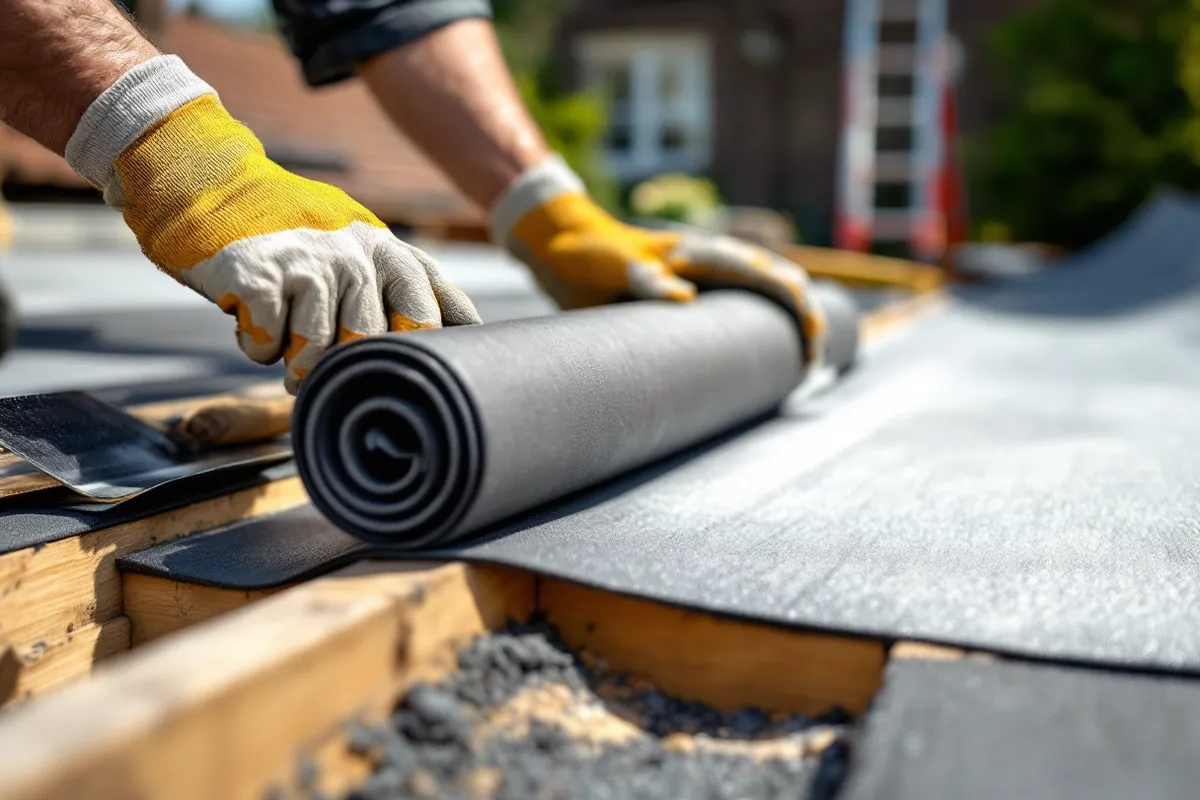
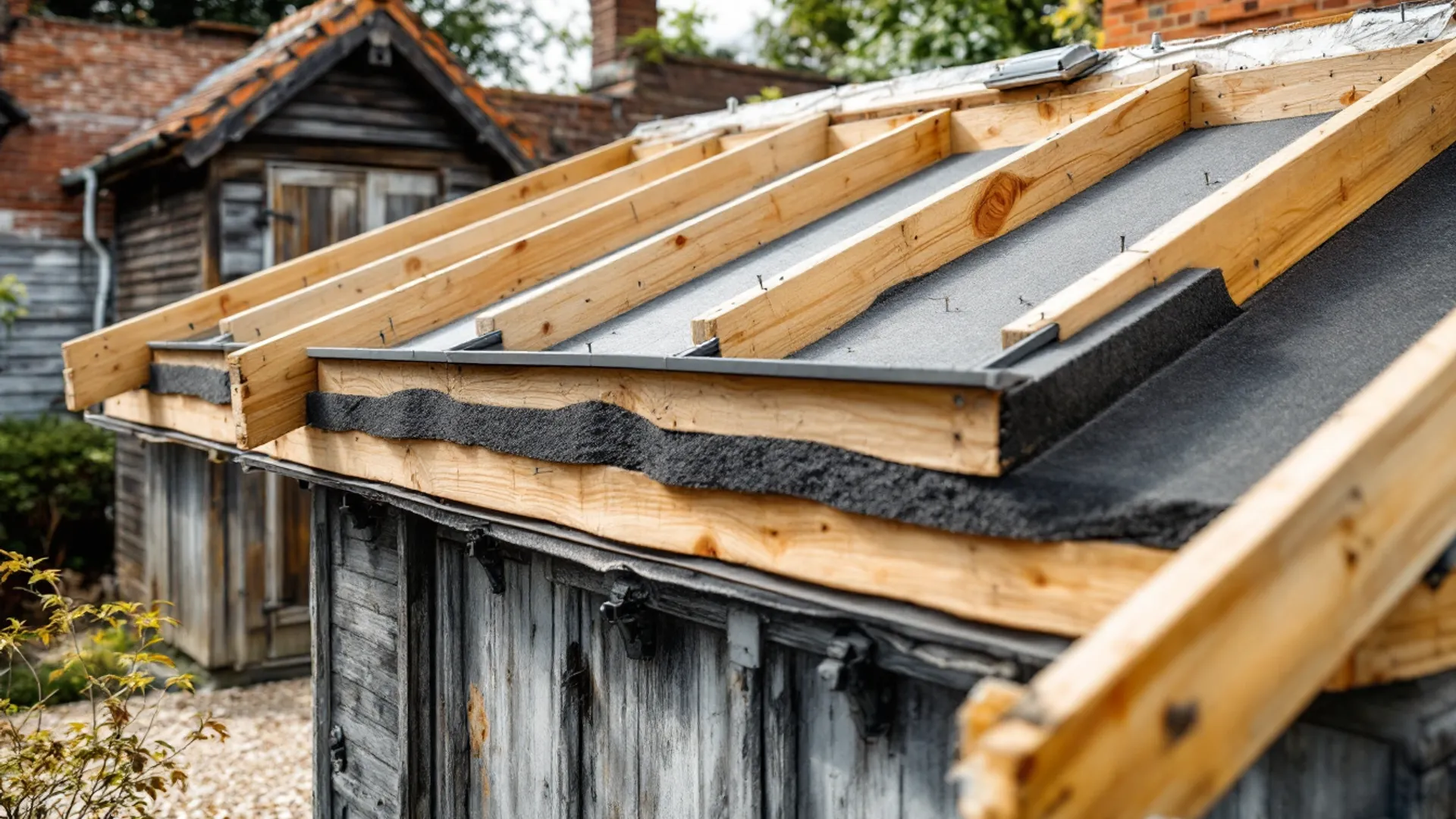
“Roofing felt” covers two distinct products. On a flat roof (shed, garage, small extension), felt is the actual waterproof covering — a bituminous sheet material, laid in layers and bonded or heat-welded at the joints. On a pitched roof, “felt” (more accurately a roofing underlay or membrane today) sits under the tiles or slates as a secondary barrier, catching any water that gets past the covering and directing it to the gutter — see our roof underlay guide for that use specifically. This guide is about the flat-roof covering.
Types of roofing felt
Mineral felt is the traditional, cheapest option — a fibreglass or organic base coated in bitumen with a mineral granule top layer, suited to sheds and low-traffic garage roofs. Torch-on felt (also called high-performance or modified bitumen felt) is heat-welded rather than nailed, giving a more reliable, longer-lasting seal, and is the standard choice for anything more than a basic shed. Self-adhesive (cold-applied) felt bonds without a naked flame, a safer option for DIY use or where a torch isn’t practical.
How to lay roofing felt (step-by-step)
The steps below are for a straightforward shed or garage roof. The sequence matters as much as the materials — most felt failures trace back to skipped preparation or a rushed lap join, not a faulty product.
- Clear and prepare the deck. Strip the old felt entirely and check the timber underneath for rot or soft spots, replacing any damaged boards before you start.
- Fit a drip edge. A metal or plastic trim around the perimeter directs water cleanly away from the fascia.
- Lay the underlay layer, parallel to the fall, with side laps overlapped by at least 150mm.
- Lay the top layer, offsetting its laps from the underlay below, with horizontal laps overlapped by at least 75mm so water always crosses over a join rather than into one.
- Bond or torch the laps fully — a cold, unsealed lap is the single most common reason a new felt roof leaks within its first year.
- Finish the edges and penetrations. Dress the felt up any upstands and seal carefully around pipes or rooflights, which fail more often than the flat area itself.
Roofing felt vs modern membranes
For anything bigger than a shed — a garage with a room above, an extension, a dormer — modern single-ply membranes, EPDM rubber or GRP fibreglass generally outlast felt considerably and are worth the extra cost. Our flat roof materials guide compares them directly. Felt remains a legitimate, cost-effective choice for small, low-stakes structures where a 10–15 year lifespan is perfectly acceptable.
Find Trusted Roofers connects UK homeowners with local flat-roofing specialists for anything beyond a straightforward shed re-felt. Tell us about the job and we’ll match you with a roofer covering your postcode.
Roofing Felt: What It Is & How To Lay It — FAQs
How long does roofing felt last?
Basic mineral felt on a shed or garage typically lasts 10-15 years. Modern high-performance torch-on felt systems can last up to 20 years with correct installation. Compare that with EPDM or GRP, which run 25-30+ years — see our flat roof materials guide.
Can you lay roofing felt yourself?
On a small structure like a shed, yes — it's a realistic DIY job with basic tools. On a house extension, garage with habitable space below, or anywhere a mistake risks water damage to the building, use a roofer: correct falls, laps and edge detailing matter more than they look like they should.
How much overlap does roofing felt need?
As a rule of thumb, horizontal laps (where one roll ends and the next begins along the slope) should overlap by at least 75mm, and side laps (where rolls run alongside each other) by at least 150mm — always check the specific product's instructions, as this varies by felt type.
What's the difference between shed felt and roofing membrane?
Shed felt is a lightweight mineral or fibreglass-based bituminous felt suited to small, low-traffic structures. A breathable roofing membrane sits under tiles on a pitched roof to manage moisture, which is a different product for a different job — see our roof underlay guide.