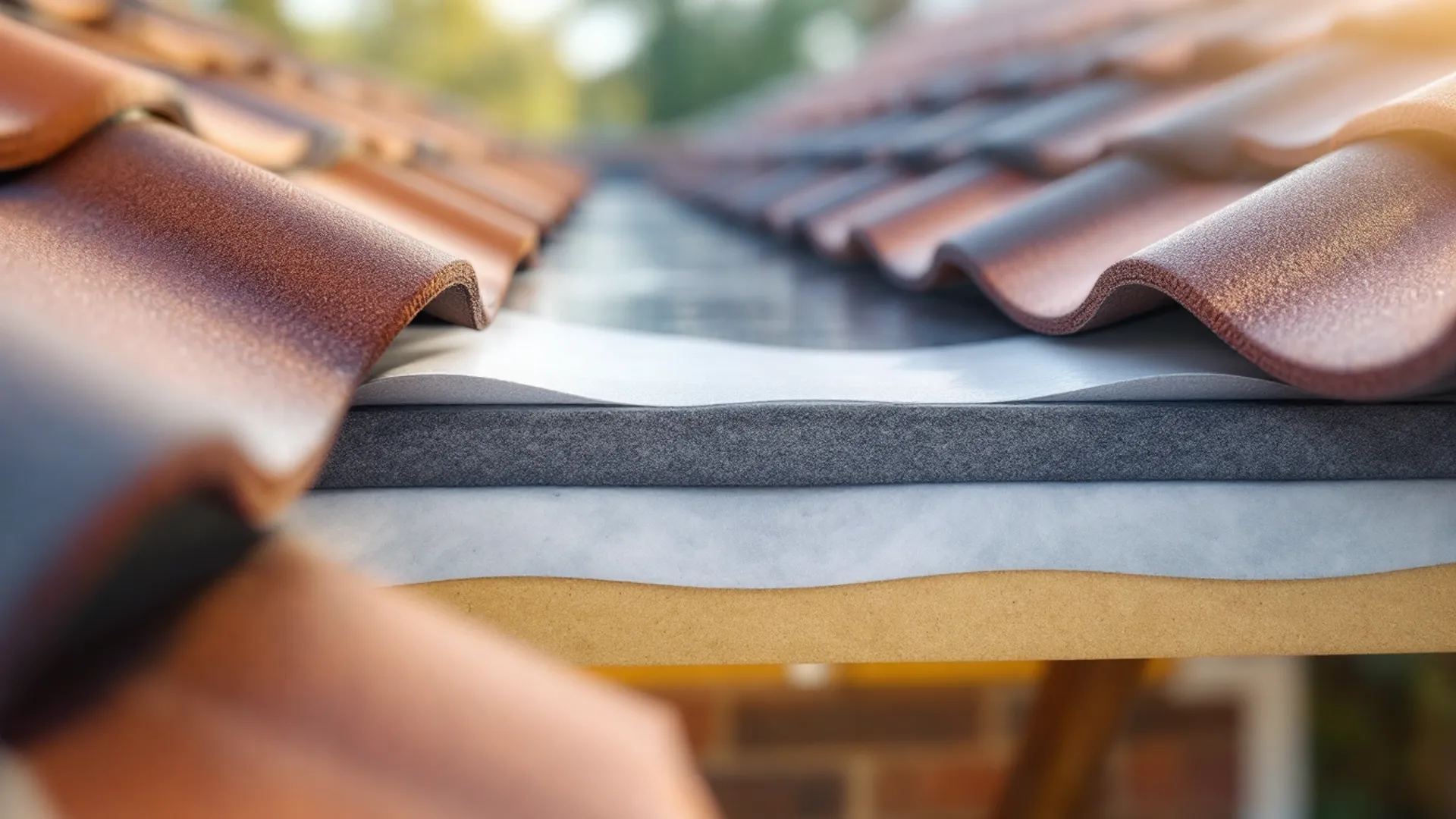
The layer under your roof tiles rarely gets a thought until something goes wrong. Since it’s doing more work than most homeowners realise, it’s one of the first things to check when a roof starts leaking without an obvious cause.
What roof underlay/lining does
Underlay is also called lining, felt or membrane, depending on who you ask and when the roof was built. It’s a continuous waterproof layer fitted under the battens and tiles of a pitched roof. Its job is a safety net. Tiles and slates are good at shedding the vast majority of rain, but wind-driven rain, minor cracks, and small gaps at edges and junctions inevitably let some water through. The underlay catches it and channels it down to the gutter, rather than letting it reach the roof timbers or your ceiling.
Breathable vs non-breathable membrane
Older roofs typically used a non-breathable bituminous felt. It stops water entering, but it also traps moisture vapour rising from inside the house, which requires proper loft ventilation such as soffit and ridge vents to avoid condensation building up underneath. Modern breathable membranes work differently: they let water vapour pass through from the warm side while still blocking liquid water from outside. This reduces, though doesn’t eliminate, the need for separate ventilation, and lowers the risk of condensation-driven timber decay. Most re-roofs today specify a breathable membrane as standard.
Signs your underlay has failed
Underlay is hidden, so failure signs are usually indirect. Look for damp patches on the ceiling that don’t correlate with any visible tile damage, a musty smell in the loft, or visible sagging on the underside of the membrane where you can see it from inside the loft. The most telling sign is a leak that keeps recurring in slightly different spots after individual tiles have been fixed. If a roofer traces a leak to a hairline tile crack but the underlay beneath has already perished, water still gets through even after the tile itself is repaired.
Do you need to re-felt when re-roofing?
In almost every case, yes. The underlay is only accessible while the roof covering is off, so a re-roof is the practical, and usually only reasonable, opportunity to replace it. Reusing decades-old, likely-perished felt to save a comparatively small amount on a full re-roof rarely makes sense. If you’re getting quotes for a re-roof, check that new underlay is explicitly included and named as breathable membrane, not left vague as “felt.”
For related reading, see our guide on the types of roof covering that sit above the underlay, and our roofing felt guide if you’re specifically dealing with a flat-roof covering rather than pitched-roof lining.
Find Trusted Roofers connects UK homeowners with local roofers who specify the right underlay for your roof and loft ventilation, not whatever’s cheapest on the van. Tell us about the job and we’ll match you with a roofer covering your postcode.
Roof Underlay & Lining: A UK Guide — FAQs
What is the difference between roof underlay and roofing felt?
They're often the same thing described two ways. The layer under pitched-roof tiles used to be called 'roofing felt' and is now more accurately called underlay or membrane, since modern versions are breathable synthetic sheets rather than traditional bitumen felt.
Do I need to replace the underlay when re-roofing?
Almost always, yes. Underlay is only accessible while the tiles are off, and old bituminous felt has usually perished by the time a re-roof is due. It's standard practice to renew it while the roof is stripped anyway.
What happens if roof underlay fails?
A failed underlay no longer catches water that gets past the tiles. Since even a hairline crack or wind-driven rain under a tile edge can then reach the timbers, the damage often shows up as a ceiling leak with no obvious cause above it.
Is breathable roofing membrane better than old felt?
For most modern re-roofs, yes. Breathable membranes let moisture vapour from inside the loft escape through the roof rather than trapping it, while still stopping wind-driven rain from entering. This reduces the risk of condensation and timber decay.