Slate and tile are the two dominant coverings on UK pitched roofs, and the choice between them is one of the biggest decisions in any re-roof. Here’s how they actually compare.
Slate roofs at a glance
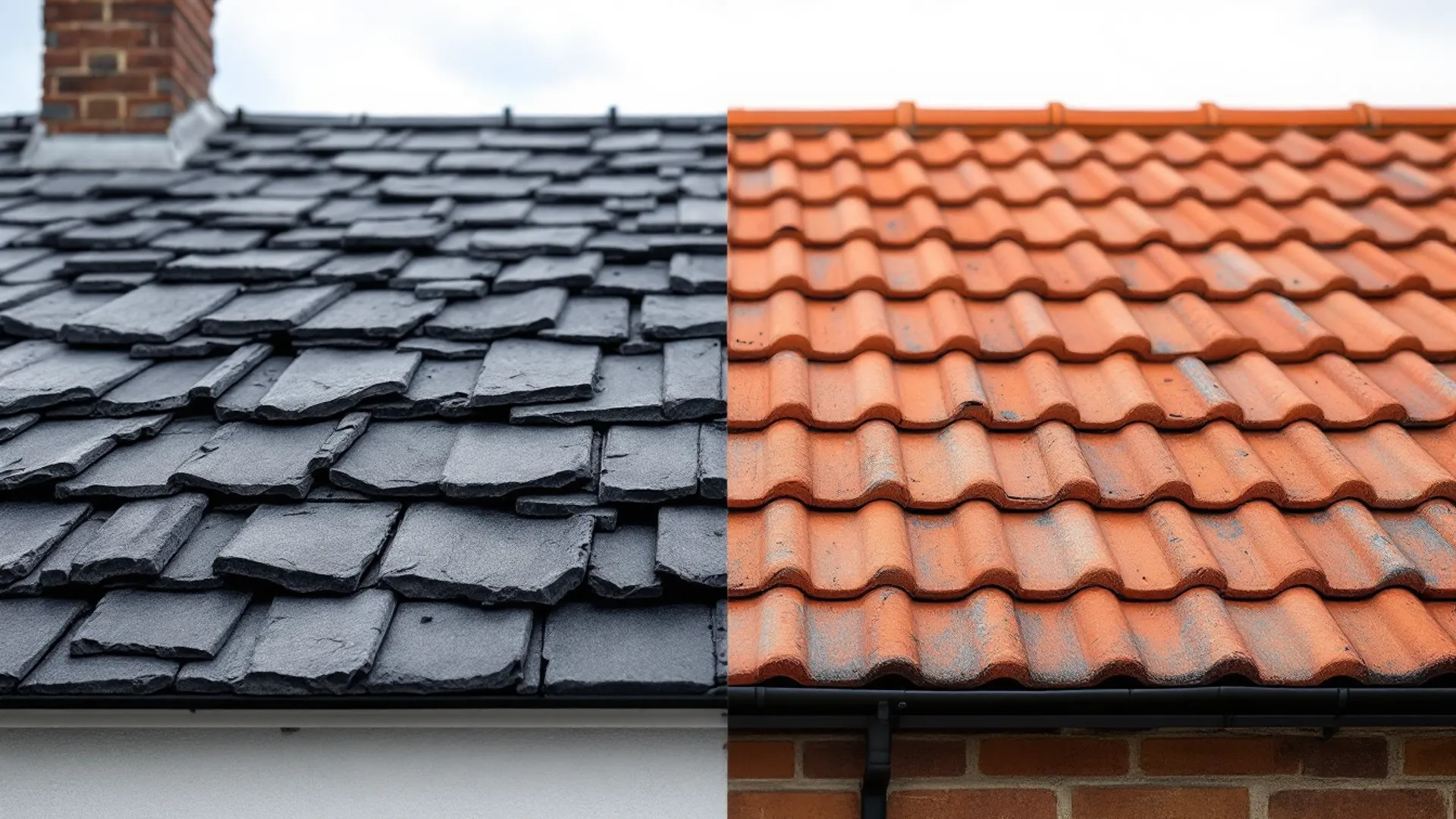
Natural slate, most commonly Welsh, Spanish or Cumbrian in the UK, is quarried stone split into thin, dense sheets. It has a distinctive flat, slightly irregular texture that’s hard to replicate convincingly, which is why conservation areas and listed buildings so often specify it. Properly laid slate on a sound roof structure routinely lasts 80–100 years or more, and the individual slates rarely fail. When a slate roof does eventually need attention, it’s usually the fixing nails corroding, known as nail sickness, rather than the slate itself wearing out.
Tile roofs at a glance (clay vs concrete)
Clay tile comes in plain tile, small and traditional and used across much of the South East, and pantile, a distinctive S-profile common in East Anglia and Scotland. It weathers to an attractive patina and, like slate, suits older housing stock, although it costs more than concrete.
Concrete tile is the modern standard covering the majority of post-war UK housing. It’s manufactured to consistent tolerances, available in a huge range of colours and profiles, and costs meaningfully less than either slate or clay. It typically lasts 40–60 years, shorter than slate, but entirely adequate for most homes and re-roofs.
Cost compared
As a rough guide, concrete tile is the cheapest option for a full re-roof. Clay tile sits in the middle. Natural slate, particularly genuine Welsh slate rather than reclaimed or synthetic alternatives, is the most expensive by a clear margin. For actual UK price ranges on a full re-roof, see our roofing costs guide, since the material is only one part of the bill alongside scaffolding, labour and any structural work uncovered along the way.
Lifespan & durability
This is where slate earns its price premium. A genuine slate roof laid correctly can outlive several rounds of tile replacement on a similar-aged house. Concrete tile isn’t fragile, it’s simply rated for a shorter service life by design. That’s a reasonable trade-off if the higher upfront cost of slate doesn’t make sense for the property or how long you plan to stay in it.
Weight & structure
Roof weight matters for the structure underneath, particularly on older properties or when adding a second storey. Contrary to what many assume, slate isn’t automatically heavier than tile. Some slate products are lighter per square metre than concrete tile, while others aren’t, so never assume. Ask your roofer to check the actual weight of your chosen covering against what the roof structure was built to carry, especially if you’re switching material types during a re-roof.
Looks, heritage & conservation areas
Beyond the practical differences, slate has a fine, slightly irregular texture that many people consider more attractive on period properties. Tile, clay especially, has its own strong regional character, since pantile roofscapes are a defining feature of parts of East Anglia and Scotland. If your property sits in a conservation area or is listed, the choice may not be entirely yours. Planning rules commonly require matching the existing material, most often ruling out a switch from slate or clay to concrete tile. Check with your local authority before assuming.
Which is right for your home
If you’re re-roofing like-for-like, planning constraints and the existing structure usually settle the question for you. If you have a genuine choice, whether a new build, an extension, or a property outside any conservation restriction, weigh the upfront cost of slate against its much longer lifespan. Get a proper survey rather than assuming either material suits your roof without one. See our guide on flat vs pitched roofs if part of the decision also involves changing the roof shape.
Find Trusted Roofers connects UK homeowners with local roofers experienced in both slate and tile, who’ll give you an honest recommendation for your property rather than pushing whichever they have in stock.
Slate vs Tile Roof: Which Is Best? (UK) — FAQs
Is slate or tile better for a roof?
Natural slate lasts longer, often 80-100+ years, and suits period and conservation-area properties, but costs considerably more upfront. Concrete tile is cheaper, widely available and perfectly durable for 40-60 years on most modern homes. Neither is universally better, since it depends on the property and budget.
Why is slate more expensive than tile?
Natural slate is quarried stone, cut and graded by hand in most cases, which costs more than manufacturing concrete tiles at scale. Welsh slate specifically commands a premium due to limited quarrying and high demand for heritage matching.
Can I mix slate and tile on the same roof?
Not usually by choice. A roof is normally covered in one consistent material for weight, fixing and weathering reasons. The exception is where an extension uses a different, usually cheaper, covering than the original house, which a roofer can advise on for visual consistency.
Does a slate roof need a stronger structure than tile?
Natural slate is often lighter per square metre than concrete tile, despite looking heavier, although weight varies a lot between products. Always check with your roofer whether the existing roof structure needs any reinforcement for your chosen covering.
Do conservation areas require slate roofs?
Often, yes. Conservation areas and listed buildings frequently require like-for-like natural slate, or clay tile depending on the local vernacular, rather than allowing a switch to concrete tile. Check with your local planning authority before assuming you have a free choice.